
Intent
Intent
At Larkspur Primary school, we recognise geography’s fundamental role in helping children to develop a connection and understanding of the world around them: places near and far, people, resources and natural and human environments. Our geography curriculum fosters a natural curiosity, empowers children to think clearly and critically about the world around them and engages them to investigate the world with growing independence through high quality resources.
Our geography curriculum reflects our own environmental and social context whilst also enabling children to develop a more conceptual understanding at regional, national and global scales.
Our geography curriculum is knowledge and vocabulary rich, ensuring that children gain a deep understanding of fundamental facts and concepts as well as embedding key vocabulary and terminology. In addition, children have regular opportunities to develop their curiosity and understanding by carrying out fieldwork.
Aims of the Geography Curriculum
The national curriculum for geography aims to ensure that all pupils: – develop contextual knowledge of the location of globally significant places – both terrestrial and marine – including their defining physical and human characteristics and how these provide a geographical context for understanding the actions of processes – understand the processes that give rise to key physical and human geographical features of the world, how these are interdependent and how they bring about spatial variation and change over time – are competent in the geographical skills needed to: – collect, analyse and communicate with a range of data gathered through experiences of fieldwork that deepen their understanding of geographical processes – interpret a range of sources of geographical information, including maps, diagrams, globes, aerial photographs and Geographical Information Systems (GIS) – communicate geographical information in a variety of ways, including through maps, numerical and quantitative skills and writing at length. (National Curriculum, Department for Education 2013)
Substantive and Disciplinary Knowledge
Within our curriculum, we ensure that both substantive and disciplinary knowledge is developed sequentially throughout all years of primary learning.
Substantive Knowledge sets out the content that is learnt – the ‘substance’ of our curriculum. This includes locational knowledge, place knowledge, human and physical processes and geographical skills.
Disciplinary Knowledge considers how to work geographically in order to gain knowledge and to develop a sense of the world. It is through disciplinary knowledge that pupils learn the practices of geographers. This includes an understanding and an awareness of place and space, geographical analysis, scale and connection, environment and sustainability, and culture and diversity.
Locational Knowledge
At Larkspur Primary School, we recognise that building a student’s locational knowledge of countries and continents forms an essential part of learning in geography. From EYFS to Year 6, children gradually build on their locational knowledge throughout the Key Stages based on National Curriculum expectations. These outcomes are broken down across year groups and are revisited each term.
Key Stage 1: – name, locate and identify characteristics of the four countries and capital cities of the United Kingdom and its surrounding seas (Year 1) – name and locate the world’s seven continents and five oceans (Year 2)
Key Stage 2: – name and locate counties and cities of the United Kingdom, geographical regions and their identifying human and physical characteristics, key topographical features (including hills, mountains, coasts and rivers), and land-use patterns; and understand how some of these aspects have changed over time (Year 3) – locate the world’s countries, using maps to focus on Europe (including the location of Russia) and North and South America, concentrating on their environmental regions, key physical and human characteristics, countries, and major cities. (Year 4/5) – identify the position and significance of latitude, longitude, Equator, Northern Hemisphere, Southern Hemisphere, the Tropics of Cancer and Capricorn, Arctic and Antarctic Circle, the Prime/Greenwich Meridian and time zones (including day and night) (Year 6) (National Curriculum, Department for Education 2013)
Geographical Skills and Fieldwork
We intend for children to become passionate and knowledgeable about our local community and beyond, by learning through experiences in practical and fieldwork activities. Through fieldwork, pupils encounter geographical concepts first-hand and connect their learning in classrooms with the complexity of the real world.
Fieldwork not only aids memorisation but helps integrate learning – “The connections between processes and location are revealed and pupils remember more of what they have been taught.” (Research review series: Geography 2021)
In EYFS, children describe and observe their immediate environment using observation, discussion, stories, non-fiction texts and maps.
In KS1, fieldwork and map skills are developed with a study of the school and local area, including the use of cardinal points of a compass. OS maps, digital mapping and satellite images are introduced to pupils. Simple keys and features are identified and mapped locally to help begin to understand place, distance and scale.
As pupils begin KS2, fieldwork and map skills are revisited with the intercardinal points of a compass being introduced to elaborate on the knowledge pupils already have around cardinal points. Further studies are undertaken to enhance fieldwork and map skills. Children experience fieldwork in more unfamiliar contexts developing their geographical understanding further.
Implementation
Geography is taught throughout the year within unit blocks, enabling children to achieve depth in their learning. The curriculum overview identifies the geography units to be covered each term for every year group. Geography is taught in half termly blocks alongside history.
Each unit aims to activate and build upon prior learning, including EYFS, to ensure better cognition and retention. This is identified within each unit. Each unit is carefully sequenced to ensure progression in pupils’ skills and key knowledge. The overview is designed to provide each year group with units that explore the main substantive knowledge categories: locational knowledge, place knowledge, physical and human geography in addition to a geography skills focus with fieldwork opportunities.
The local area is utilised to achieve the desired outcomes, with opportunities for learning outside the classroom embedded in practice. School trips and fieldwork are provided to give first hand experiences, which enhance children’s understanding of the world beyond their locality.
Retrieval and Retention
Within each unit, core knowledge is defined and identified for class teachers and is taught through a focused teaching sequence that is coherent and built around spaced retrieval practice. Pupils are given opportunities to retrieve their knowledge at regular intervals throughout the unit with an aim to reinforce and revisit previously taught knowledge and vocabulary. This is carried out through a variety of approaches: – Cumulative questions are built into each lesson sequence and are used diagnostically. – Low stakes quizzes are used to summarise what children know and can retrieve. – Phased vocabulary questions, increase in breadth and depth. – Mid and end of unit learning reviews or focused summaries with word banks and diagrams to support pupils to draw on prior knowledge. – Technology is used to support cumulative questioning and retrieval. For example, Seterra, Kahoot and Wordwall.
Vocabulary
We recognise the importance of vocabulary in order to close the vocabulary gap in EYFS and key stages 1 and 2. We want our children to have an expansive vocabulary and through teacher modelling and planning, children are given opportunity to use and apply appropriate vocabulary. Our geography unit plans outline target geographical language for each lesson. This is taught and built upon across the curriculum and subject specific words are incorporated in each module.
SEND
We aim for all geography lessons and learning questions to be accessible to all pupils. Class teachers are able to use pre-teaching of vocabulary sessions to provide children with the opportunity to demonstrate an understanding of subject specific language. Presentation slides and resources are used in lessons with the aim of minimising cognitive overload, so children that can use and apply their knowledge more easily. Sentence stems can be used where necessary to aid with structuring oral responses or written outcomes.
Impact
In order to understand the impact of our geography curriculum, the subject leader uses the following methods: – Opportunities given to children to revisit learning to help ensure they are retaining knowledge. – Marking of written work in books. – Discussing outcomes of enquiries with class teachers. – Pupil interviews and inviting children to talk about their learning whilst sharing their books. – Moderation of children’s books/work. – Learning walks and interviews with children.
Assessment
Geography work is assessed regularly by class teachers through formative assessment techniques with feedback on their successes and development areas provided within and across units. Teachers use planning documents at the end of the unit to assess children’s understanding against the core knowledge for that unit. Subsequent lessons are adapted for further retrieval or to address misconceptions.
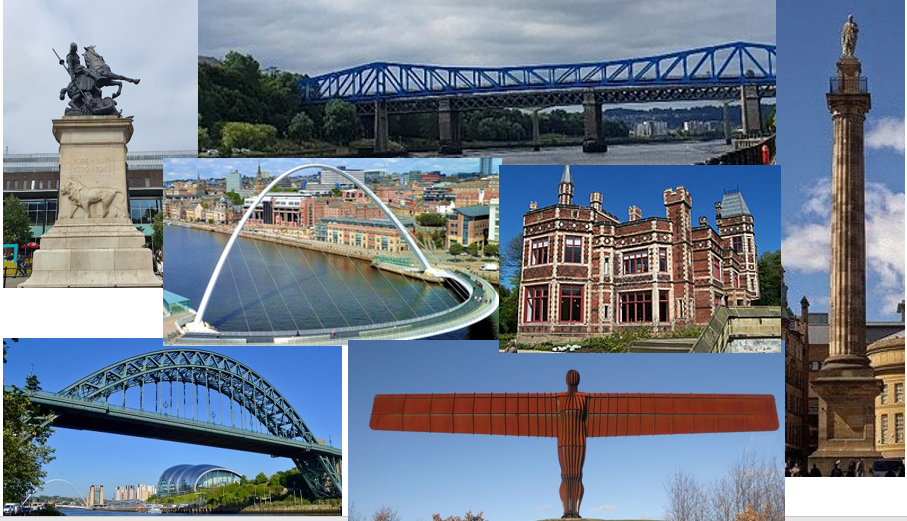
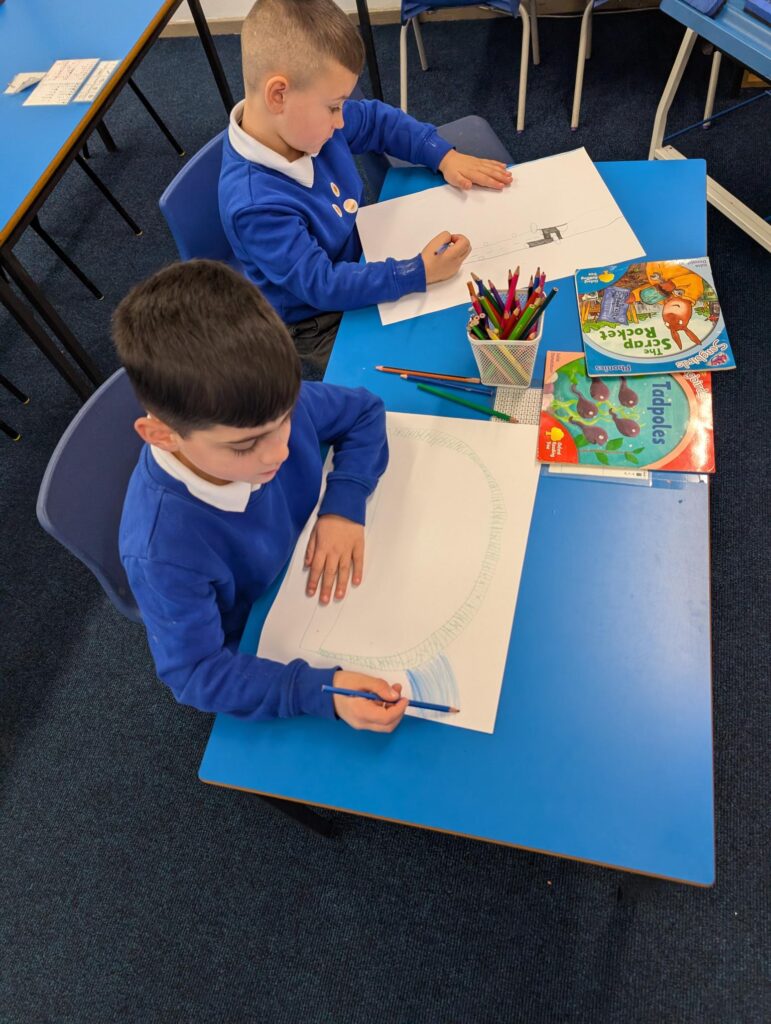
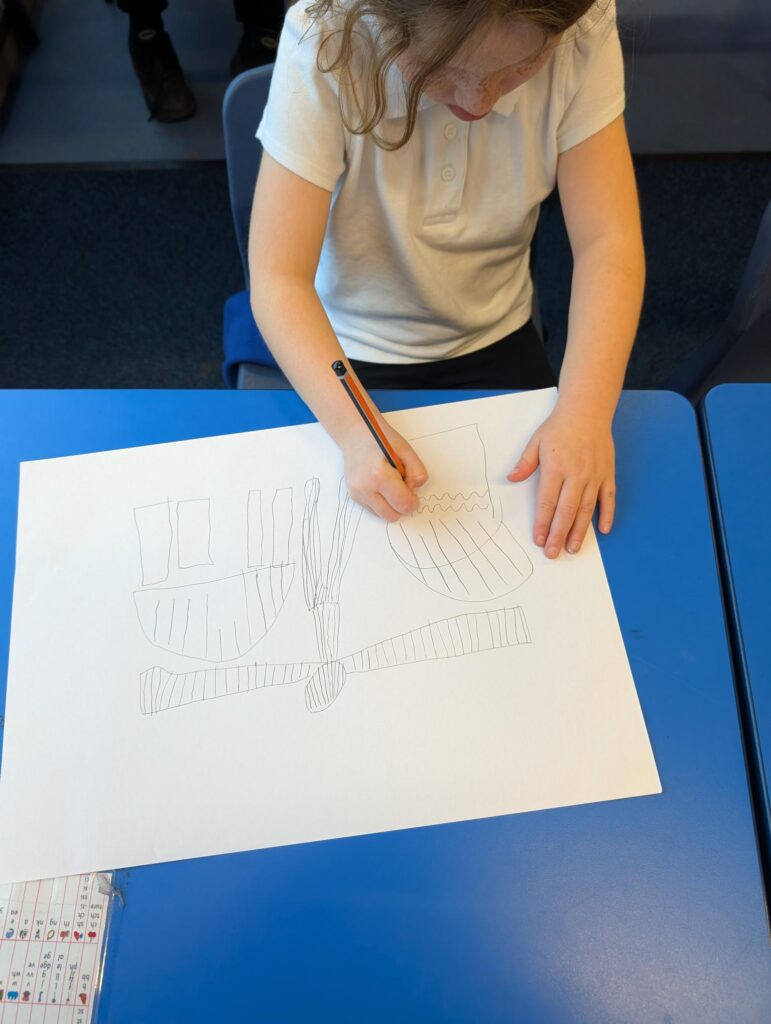
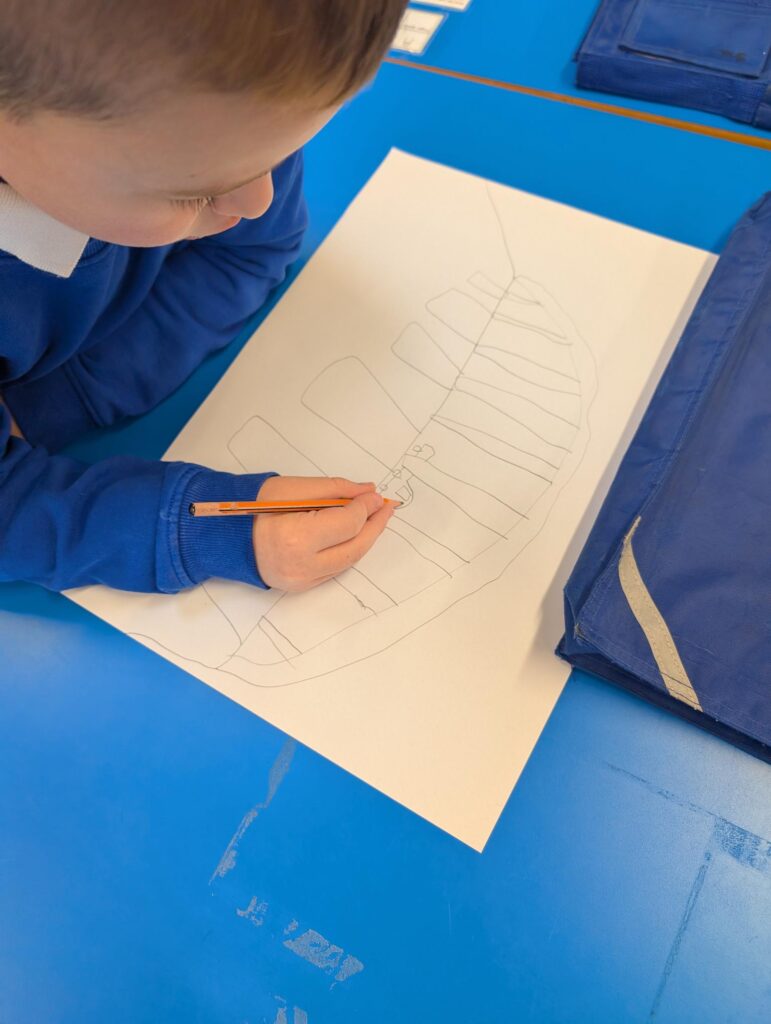
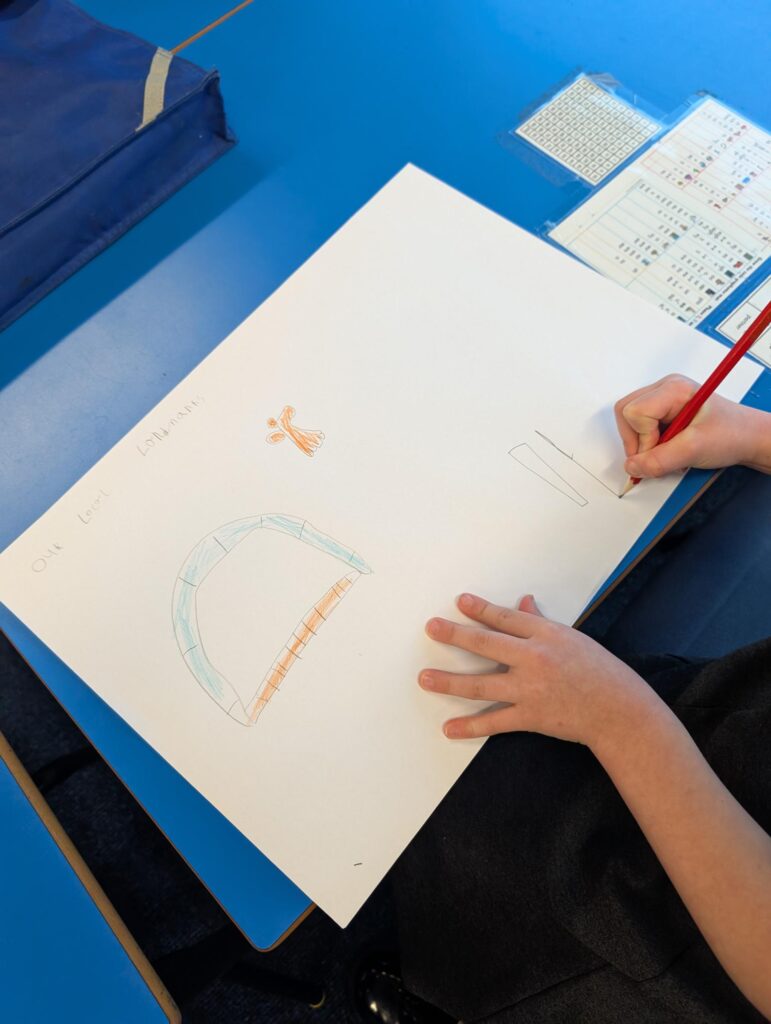
Year 1&2 have been learning about local landmarks. We looked at lots of different landmarks from our local area and made posters of the ones we liked the most. We used some images for inspiration.